
This is an attempt to document how our process, through our bi-weekly 2-hour online meeting can be a generative space, to be present in allowing “things that might heretofore not existed” to surface. In this blog post I detail the timeline of events, including a full transcript of when the “passing notes dance structure” surfaced.
This happened in our weekly MAP meeting on June 7, 2021.
Back Story
There is always a back story with me.
In 2009 my friend and colleague Carol Burch-Brown invited me to join her “Living Darwin” project. Celebrating the anniversary of Darwin’s birth, and the publication of “Origin of Species”, the project was a “year with Darwin”. Collaborations that included performances, gallery installations, workshops, a 24-hour livestreamed event called “Singing Darwin” and a lot of reading of Darwin’s works. (It was an intensive “year of Darwin”, which prompted the following year to be “a year without Darwin”.) Out of that period of time one quote in particular has stayed with me as an intriguing metaphor, or maybe an analogy, about how a creative idea shows up and evolves into a substantial THING (a dance, a process, a structure, a composition, a methodology, an organization…)
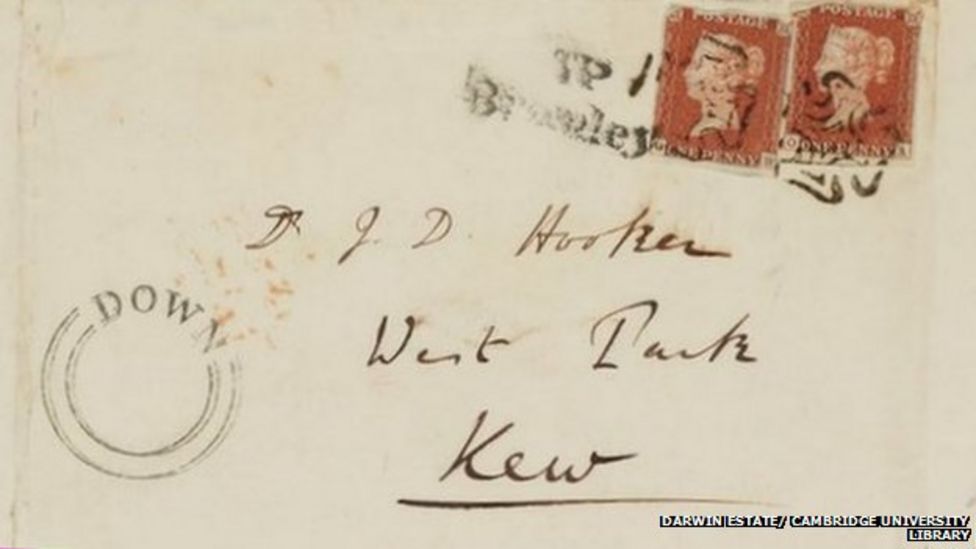
In a letter that Darwin wrote to his close friend and naturalist Joseph Dalton Hooker in 1871, he outlines the beginnings of a hypothesis about how life began. Darwin avoided writing about how life began in his books – way too dangerous during his time and a challenge to his own spiritual beliefs as well; but he did speculate in private. I have always been struck by this speculation, and the poetry of the language. Later, when I spent time with evolutionary biologists, who investigate the beginnings of life as the “right conditions’ for the first molecules to combine and build ever more complex molecular formations; the notion of “right conditions” became even more salient for me.
Note: by “right” I do not place a judgement on right as opposed to “wrong” or right as “correct” but rather as a certain confluence, series of conditions, whereby something happens that creates a tangible some thing. A magic algorithm, perhaps.
“It is often said that all the conditions for the first production of a living organism are now present, which could ever have been present. But if (and oh what a big if) we could conceive in some warm little pond with all sorts of ammonia and phosphoric salts, light, heat, electricity etc. present, that a protein compound was chemically formed, ready to undergo still more complex changes, at the present day such matter [would] be instantly devoured, or absorbed, which would not have been the case before living creatures were formed.”
Charles Darwin to Joseph Dalton Hooker, 1871
“It is often said that all the conditions for the first production of a living organism are now present, which could ever have been present.
I blend this with the tenets of Open Space Technology, also sometimes known as the Four Immutable Laws.
These tenets say:
Whoever is present are the right people;
Whenever it begins is the right time,
whatever happens is the only thing that could happen;
when it’s over, it’s over.
I like to think about when we intentionally get together – for our MAP, for Dance Ensemble, for a performance…. The people who show up are the “right” people in that moment. The moment happens because of the configuration of who is in the room, the energy compound of those particular people at that particular moment in time and space.
“ ..all the conditions for the first production of a living organism* are now present, which could ever have been present…”
*insert “a thing we might create/make” for “living organism”
When we get together (and whoever comes, is): the conditions for the production of a thing we might create/make are present; and could ever be present to exist right here right now in this moment.
“But if (and oh what a big if) we could conceive this once in a lifetime gathering is like some warm little pond with all sorts of ammonia and phosphoric salts, light, heat, electricity etc. present…”
energies of creativity, certain people, in certain moods, in a certain time/space, that is only available in this one and only particular moment of “right” conditions at this time, serendipitous conditions.
that a protein compound was chemically formed, ready to undergo still more complex changes,
That an idea for an art/create/make formed, ready to undergo still more complex changes
at the present day such matter [would] be instantly devoured, or absorbed, which would not have been the case before living creatures were formed.”
In this exact moment at this exact time, this idea (art/make/flame/inspiration) is instantly devoured (taken in by our enthusiasm, curiosity), or absorbed (again – taken in) and this thing had not ever been formed in quite this way ever before, and will never be formed quite this way again. But will continue to exist, and change, and grow, and evolve.
What happened on June 7?
Collectively, organically, we came up with a draft template for a possible dance improvisation score we are calling Note Passing.
Summary:
We started with checking in/reporting in on what we had done We floated around for awhile talking about everything from fish to kink theory, and all that floating around in the brine it led us a conceptual idea of a dance improvisation score around a notion of note passing, and dialogue about the structure that included and ideas of intention, consent and power. We spent awhile fleshing out this idea for a improvisational score. Each of us with unique ideas of where we might take it.
Then Halvor interrupted us with a logistical matter… perfect in many ways. Maybe we needed to ground ourselves in concreteness after all that floating in the brine.
Then Lilith proposed a dance experiment connected to something from last week that Halvor had raised. We danced, and processed. And then Halvor proposed an experiment around proprioception, and we did it and processed. And wrapped up our meeting. Each artist continued to pursue in their own way ideas about the Note Passing structure.
My question:
How can we honor this process? What we did in these two hours was really amazing. It was rigorous and it was fun. It was generative. it was magical.
What might happen if we stay present and attuned, if we recognize and honor the impulses when they arrive and we approach them with integrity, and a “yes” to play attitude. The notion of “I have an experiment. Well, let’s play”. There is a rigor in there, a lovely rigor.
The Trajectory: In Detail
Notes taken from a recording of the ZOOM session.
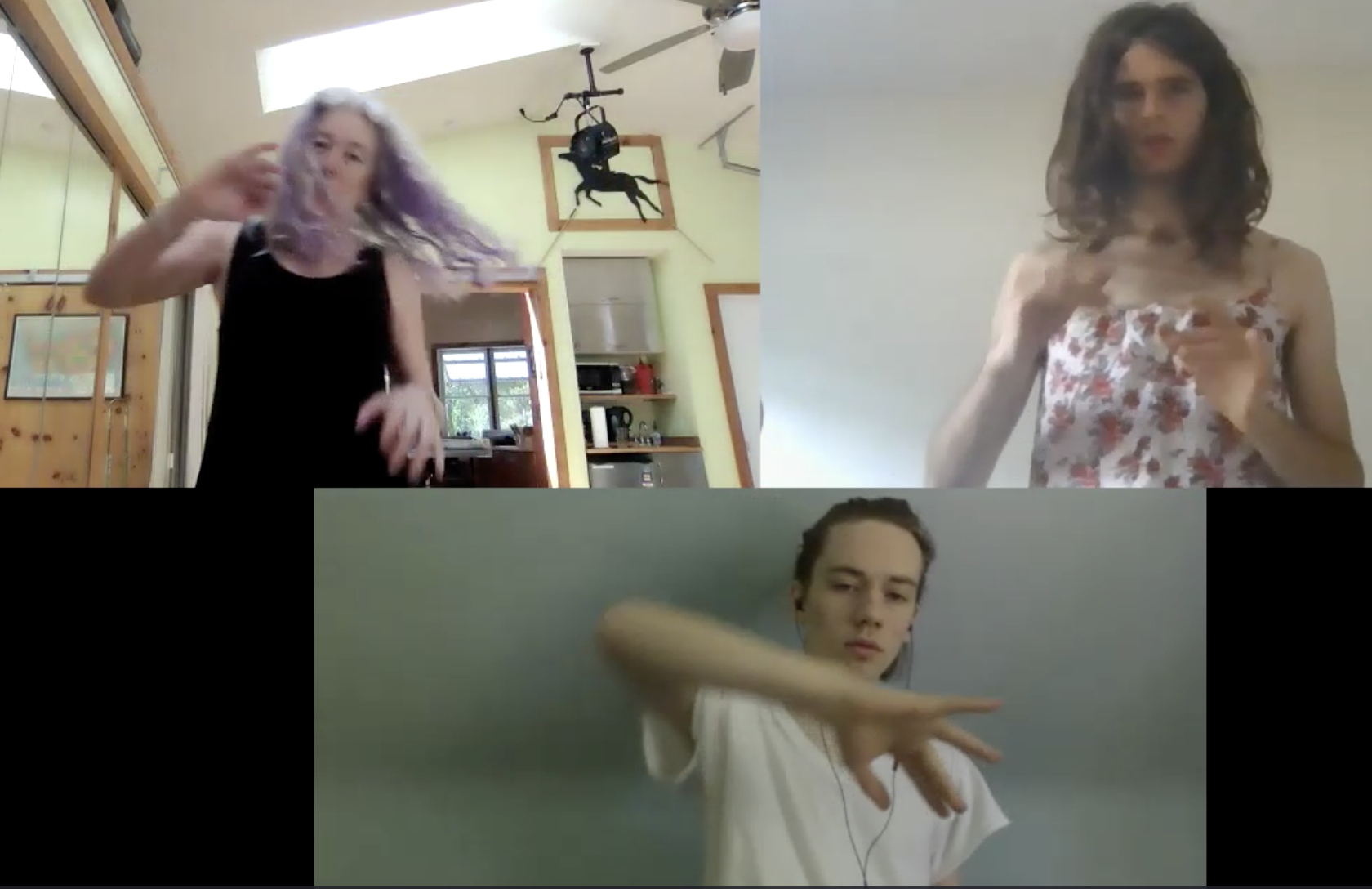
On June 7th we began loosely with a check in, that at one point Lilith announced about themselves, “That wasn’t a check in! That was a report!”
Brought forth into the space:
- Lilith begins with:
- “artistic practice includes what I wore today”
- Went to the climbing wall
- Reading “Invisible Connections” – thoughts about
- Directors, Choreographers, Performers – power, society and consent
- Asymmetric power dynamics
- Applications of lenses from theories of Kink theory, GWSS theories, Critical Race Theory
- Consensual power exchange
- Principles of consent
- “I had an encounter with a couple… fish that use electric fields like bats use sonic fields. You can make a cool art exhibit with these fish. That sounds super cool but from a consensual viewpoint that sounds super dubious…”
Halvor responds: makes me think of contractarianism; which is moral, political/philosophical that uses agreements… laws and ethics and stuff.. as lenses.
Celeste (attempts to loop us to our MAP) and asks:
“What do we want to make that contributes to DB2D website, which started as a search for community?”
Lilith asks for, and Celeste gives, a brief history of the trajectory of DB2D.
A notion that rises is: From Sita Popat, “Invisible Connections” reading, written in 2006; and now we have lived through a pandemic: how does that change what she wrote about, what we are doing?
We talked about how “need” for digital spaces came about because of pandemic.
Lilith:
“no one chooses, everyone is forced to”
“in ideal personal conditions, we choose live over digital, that’s not grounds for dismissal”
Halvor brings forth – it’s easier to talk to people in the same room. If you are in the same room with someone, you don’t send them an email.
Celeste opens up curiosity about one tactic from Zoom, “chat” how/if that might carry forward post-pandemic.
Discussion about chat function.
Halvor cites two different ways chat functioned in two different classes during pandemic.
In one, the professor used chat as a pedagogical function; in the other the professor couldn’t see the chat so it became a private space for side comments.
So our “warm little pond” had steamed up with all these elements: from fish to consent to power dynamics to online learning to chat….
And then this transpired: (edited slightly)
TRANSCRIPT OF THE “MOMENT”
Celeste (00:03):
I’m curious about one tactic in particular that we’ve developed through zoom…which is chat and …what the function of chat has been. I noticed for myself sometimes that I’ve started using chat when I want to make sure that I can make a quick comment on something that somebody has said, but I don’t need to take more space than that. ..Or to be able to have it as a place holder… sometimes I use it because I’m feeling shy and I would rather put it in chat, then take the screen attention to say it. .. I use it to collect notes that I would probably use a whiteboard for, … so I’m wondering, I wonder what the carry over might be or do we just lose that entirely or once we get back live… I had images of covering the inthe studio with big sheets of paper that we could chat on if we needed to and what that might form…
Halvor(01:39):
There are two classes … non dance classes …two interesting ways, but it’s been used. One is in math classes, … where the teacher would ask some question and then you could like type your answer privately in chat to the professor. And then he could like say oh, three people have given me the correct answer. And then people would like be more willing to speak up because they wouldn’t say the wrong thing in front of the whole class. … I had like a philosophy class .. the professor was walking around a big room and didn’t really have time to look over at chat. So the chat became a way for people in the class to … make side comments that weren’t directed towards the teacher …Which was also interesting. … makes me think of having the audience be able to chat, which is something .. in certain live streams. Um, but it could also be, yeah,
Celeste (04:44):
It makes me .. dream about, .. an improvisational structure where, you could,
[suddenly the lights went out in the room Lilith was Zoom-ing from. She got up and danced and the lights came on. Halvor put in chat: “I am here, lights!”]
that was so beautiful!
.. improvisational structure where you could write little instructions to people ..on a piece of paper. And so if the whole room is in…, a kind of neutral flow of, of just being in body and then somebody slips up to you and hands you a piece of paper and it has a prompt on it, like find, three ways, to tell the story about a bat, you know? So then if I got that note, then I would be playing with that idea. but nobody else would know what idea I was playing with. What what that might inspire in everybody else? ..then we could pause and say, what did you think was happening? where did you go with those movements?
Lilith (06:07):
… as soon as you said, this note thing, I felt really close parallels to, to power dynamics in, in kink, in this notion of like somebody is telling somebody else what to do. .. in that way, .. it’s also like exactly matches up with choreographer, performer, but it’s live. … I feel like that dynamic .. mechanism … ..of passing a note with instructions, … which could also just be like whispered instructions, gives, us, a mechanism to explicitly use that choreographer dancer power dynamic ..
Lilith (07:47):
And, just like with a choreographer somebody is like, “I want to see that in the world, I’m going to give this instruction and see the ramifications.” .. that feels like a, a cool thing. And then on the flip side, there is, there is receiving it where there’s a lot of options in terms of how much agency you want to exercise. Do you want to get this instruction? And I see where it takes you, do you want to follow the instruction? … that compartmentalization that shrink it down to a little nugget to play with, it feels very much like a zoom chat in the sense that you can do a little thing. Something from zoom chat is to provide a framework for people to give a quick response.
Lilith (08:52):
.. in a humanities class sometimes I’ll say … a three or four word comment in a class. … it’s very quick. ..people are spending 30 seconds per comment and I spend five. .. when I do that consistently, it’s like what I think of as a well-crafted little snippet. … in that way, it covers a lot more than five seconds of thinking. …I’ve been thinking about this for minutes and then I say it in five seconds. If we move on right away, people don’t have time to fully unpack it, but do they need to, I mean, according to the professor they do, because I’m always asked to elaborate and then that kills the whole thing… I don’t think I need more than five seconds of time and I’m just going to deliver the snippet. …I think what’s most interests me is the playing with power dynamics of that note passing or whispered instructions.
Halvor(10:13):
Can I add some other things I’m thinking about with this note thing? .. you could have a live in person performance where the audience all get pieces of paper and pencils and then they can write suggestions and then give them to dancers that would take them. then the dancers can respond to that prompt, but then they still have the piece of paper and they could give that to another dancer if they want to, or they could put it away and try and get another one. And then the audience could track where their suggestion goes.And then they’re also ways that the performance like give instructions to the audience. There are ways that expectations are set for whether they’re supposed to applaud or be louder or quieter. That could also be fun to like make explicit in some way.
Celeste (11:34):
That’d be fun. If you, as an audience member, got a note and your note says stand up and applaud. Great. That could be, so much fun to do. it makes me wonder what kind of, parameter one would or would not like to put on the situation. …If you created the environment between those who are deeming themselves performers and those who want to be audience, and if you all agree…
Celeste (13:23):
…How do you give, how do you create, how would you create an environment where the audience was could feel playful so that if they got something that said, you know, stand up and applaud, they do it because it would be fun and playful rather than that, they would feel, um, intimidated and frightened that they might be poked fun at… what would the, what would the circumstances need to be to set up an environment where people felt they wouldn’t be made fun of either for giving a suggestion, taking a suggestion, dealing with a suggestion.
Lilith (14:10):
The, the way that that’s traditionally done in Kink is with negotiation and boundaries…boundaries is a term that’s used elsewhere too. And negotiation, is a process of before engaging in an activity, talking about what people’s boundaries and limits and desires and expectations are and what people like. And don’t like… what I would say is to do a negotiation rather than to say, here are what the boundaries should be. And, a negotiation can happen immediately before folks take part in something or a good while before. Uh, and, and there are some negotiations that happen implicitly, based on community standards, rather than based on, individuals that can be overwritten by individual communications. .. I feel like in this context, so hard to do a negotiation with 50 people in the audience,
Halvor(16:01):
But I feel like with, with each note, it’s just like the person who’s writing it or the person who’s reading it … I do feel like, like it’s different if the audience were to like, shout something out loud to everyone, it’s like a different dynamic when it’s like just one audience member giving it to one dancer or one facilitator, like the people who are like taking the notes and giving them to the dancers could also be like a third group of filtering in some way.
Lilith (16:47):
…the consent that’s needed here is for the most part, it’s the consent of the note receiver. And for the most part, the, the messengers are not going to be super adequate, fully equipped to, to judge that consent. And perhaps there’s always the option of, another concept from kink is a safe word. And I don’t think that’s necessary here or appropriate, but I think another like way out a way that the person who is submitting to someone else’s authority, doesn’t actually submit to things that they don’t want to or shouldn’t is when you get a note, you can either drop it or do it fully, or maybe a third option.
Lilith (18:05):
I kind of like the binary though, … you get a note, you read it, you drop it or you hold it and do it. ..and that gives feedback because me as somebody who’s writing a note and somebody drops it, I’m like, oh, oops. .. and hopefully that’s people’s response when people drop a note, .. I feel like if I were a performer and I received a note that was dropped, that I dropped, I would want the person who wrote the note to think for a long time before writing their next note. Hmm.
Celeste (19:27):
What do you think would make you drop the note? What would be written that would make you drop it?
Halvor(19:36):
I think that, there are advantages and disadvantages to having, be a binary because I feel there is a lot of reactions. You could have the something, I’m very excited to do this wholeheartedly and this is something I absolutely don’t want to do. … I think there are other ways to communicate to the audience. Like you could, do something physically different with the note for different ways of responding to it. But I don’t know, this could also be worked out at a point where it’s less theoretical.
Lilith (20:29):
… I agree with Halvor that the specifics of the communication, belong in the negotiation, whether that’s written in the program notes or wherever that is.
And here, at the twenty minute mark (aprox) we shifted! Lilith had a dance experiment for us. Then Halvor posed a dance experiment. And then Halvor brought up a logistics question about MAP Part B application.
At the end of our two-hour session we recapped how we got where we got (we even wound our way back to the fish!) and we each went forward with some thoughts about where we each might take then note passing dance. See Lilith’s post, (date)
